Sunday, March 12, 2023

Beatlantis: 14} The Beatles Again <'(Look Up the Numbers)'> (1969)

The Beatles Again (December, 1969, Timaeus | Apple)

< file under Beatles In Atlantis >

~ an approximation of this album, using latest remasters and sadly substituting an oldies medley in place of Suzy Parker, can be heard here on Apple Music ~

translated: Atlantis saw much turmoil in the year since Tivowr Dorna had last overseen the release of a Beatles album, and he found himself in the midst of its intrigue. As 1969 wore on, it became clear the existence of Atlantis was coming into question— its past and present to the surface world, its very future to the nation itself.

The heinous attacks from the surface supremacists, front though the antagonists were, grew ever more deleterious by dint of their sudden relentlessness. Atlantis was left no choice but to confront surface world leadership on the global stage, at the United Nations — from within a nimbly traveling, adaptively amorphous bubble-dome of seawater. Other nations' delegates froze upon first sight, stunned onlookers transfixed by the technological majesty of an obviously advanced society.

Tivowr Dorna traversed in this conveyance with the Atlantean delegation, having been recruited to an advisory role thanks both to his engineering prowess and his pivotal role in the Western/Surface-to-Atlantean cultural bridge that was The Beatles.

The initial demand from Atlantis was twofold and doubly bold.:

  1. Surface nations, East and West, to agree to apprehend or otherwise decommission any Pirate Front Facade perpetrators within their boundaries lest risk prompt worldwide exposure of their complicity, direct involvement, and even instigation and direction of the ongoing terroristic aggression against the societally free and democratic republic of Atlantis
  2. Atlantis be granted immediate permanent membership to the UN Security Council

These demands were callously dismissed by the landed international establishment. Many surface leaders had long kept their populaces in the dark regarding Atlantis, and when the sea nation's recent diplomacy on both sides of the Cold War conflict made their existence undeniable, attempts were made by certain land governments to portray the aquatic inhabitants as primitive. Atlanteans' open arrival in the splendor of their advancements before all the world rendered such demeaning subterfuge untenable. Major nations declared Atlantis a threat, refusing to admit or deny association with the Front Facade but now tacitly endorsing the PFF's terroristic tactics. Atlantis' contemporary diplomacy, trade, and cultural exchange across the surface world geopolitical divide now perversely allowed Eastern Bloc nations to portray them as capitalistic cronies of imperialist stooges, while giving the West ammo to smear them as communist agitators and even a submerged Soviet satellite.

Atlantean president Zithå Rubbqe led the delegation on a final visit to the UN, proclaiming in an unprecedented uninvited appearance before the Security Council, "You are forcing us to acknowledge we have the means to destroy you all." For emphasis, she then stepped out of the bubble-dome, effortlessly breathing dry air by means of imperceptible wholly unobtrusive scientific wizardry, and conjured up a seemingly infinite school of winged piranha, equally at home in the air, swirling above her delegation. "Our preference," she declared, "remains only to defend our safety and sovereignty." With that, the Atlanteans departed and the assembled representatives of the surface elite gasped— as if they, ironically, were the fish out of water.

Against this backdrop, Tivowr returned to record making. Despite the severe escalation of tensions between Atlantis and the surface world, Atlanteans' love of the Liverpudlian quartet was undiminished. Though they'd never visited Atlantis, the Beatles were seen as friendly ambassadors from beyond, their artistry unassailable. Nonessential manufacturing, which had been largely halted in the previous year, was up and running courtesy of another technological marvel. Mass implementation of Dorna's Sonic Repatriator was underway, leaving the assailants neither able nor willing to assail. With a sound, they could — and many were — located and sent back to the nations from whence they'd received their marching orders. On occasion the repatriated aggressors appeared quite publicly, to the embarrassment of governments worldwide who now had to more strenuously attempt to address claims from Atlantis of an ongoing, coordinated international attempt to destabilize and possibly obliterate the sole realm of underwater peoples. Those Front operatives not sent back were generally willing to talk, becoming an invaluable intelligence resource, and so the surface antagonists had to change tactics. For the time being, Atlantis was back at peace. (Excavated journal entries indicate Dorna had also devised, with key contributions from a pair of Timaeus engineers, a companion device codenamed the Sonic Repatriotizer which apparently had mind-altering effects, designed for use on the few treasonous Atlantean PFF collaborators. Dorna and his colleagues deemed this invention too dangerous to ever be used and pledged never to reveal its development and, apparently, destroyed the only prototype and its design plans.)

Despite the triumph of Magical Mystery Tour, Dorna had been concerned about the band's ongoing prospects since the late summer 1967 death of their manager, Brian Epstein, fearing they'd now lack a key component to their cohesiveness. From the material that had amassed in the preceding year — amounting to what would be the endmost Beatles recordings, save for two early January 1970 sessions, tellingly sans Lennon, recording a studio take of I Me Mine and providing their final overdubs to Let It Be — and from corresponding correspondence — Dorna aptly discerned he was now tasked with preparing releases for a band which, like his own nation, was at an existential crossroads. Unlike as concerned the fate of his nation, though, Dorna was nearly sure of The Beatles' future: there would be none. 

In addition to a pair of non-album singles, 'white album' outtakes, and the scattered, disparate, nearly year-old countless hours of largely underwhelming recordings from the film studio rehearsals for the aborted or postponed Get Back project, and its brief ensuing studio sessions, Dorna received the completed Abbey Road album. While the singles and Abbey Road came from his friend and aboveseas mentor George Martin, the Get Back material arrived in poorly annotated boxes from unnamed Apple personnel. Martin had made clear to Dorna during Get Back that he was no longer working with "the lads" as he had, and then while preparing Abbey Road conveyed that they had deliberately reconvened to fashion a more characteristically crafted statement, intimating it would prospectively been seen as a farewell. Brief messages from both Lennon and Harrison, who'd taken to occasional friendly dispatches to Dorna since they first sent their approval of his Help!ed collection, made it even clearer the band was fracturing and unlikely to make it into the approaching decade.

Recognizing that the relative shambles of Get Back material needed some finessing to work its way into album shape, and deciding to first wait to see what, if anything, Apple eventually readied for release from those tapes, Dorna set aside consideration of most of that material until the next release.

Privy to Abbey Road's likelihood as the band's recorded swan song, he earmarked that for their final Atlantean issue. Further contributing to this decision to delay what was a finished and in Dorna's view near-perfect LP, he thought the impeccable Abbey Road ideal for the surround treatment he'd given to Pepper's. With the three-needle LP surround turntable tech out of production and in relatively few homes, and with the cessation of consumer optical disc production for duration of the surface–sea dilemma, Timaeus would need to first devise a new means of delivery for any such multichannel experience.

Hence Dorna set about compiling from the remaining recordings a set both wistful and lighthearted, relying heavily upon demos and on examples of the band's trademark humor, while enthusiastically incorporating a little assistance from the combo's friends to round out the selections. 

Starting with perhaps the earliest existing evidence of their joking nature, leading right into more joviality, by way of Suzy's Parlour, from the reportedly oft-grim Get Back sessions, and concluding with the band's funniest number, The Beatles Again surprised and delighted Atlantean listeners. Taking advantage of the (safely) expanded LP length of the new Timaeus vinyl formulation, with each side around half an hour, the collection was named as a followup to the band's sprawling self-titled release of the previous year (with a nod to an Odeon compilation issued in Brazil half a decade earlier under this very title) and proved equally as eclectic, if not as magisterial, as that double LP. Though he'd considered, due to reliance on demos, jams, or outtakes, issuing this as band's second budget release on the Critias imprint, Dorna knew the tremendous strength of the second side ruled that out. However, it became what he'd denominated to staffers as "stealthy bargain" due to its expanded length coupled with a somewhat lowered retail price compared to other Timaeus releases. 

Surmising that a famed soloist's guest spot helped While My Guitar Gently Weeps land on The Beatles, Dorna embraced utilizing some prominent outside contributions to expand the number of quality Harrison compositions, including the Jackie Lomax sung Sour Milk Sea, featuring George, Paul, Ringo, the aforementioned guitarist friend, and Revolution pianist Nicky Hopkins, and the Billy Preston fronted cowrite Sing One for the Lord, also featuring Harrison and Starr. George, who'd sent the latter directly to Dorna in an early mix, advised he was considering adding a choir. Dorna wrote back, asking for permission to explore such an addition. George happily agreed, and the version that appeared on The Beatles Again, never to be heard outside Atlantis, featured an Atlantean choir recorded by Dorna in an arrangement by legendary Atlantean choral composer Mift Deloniumn. Harrison would soon overdub the widely popular Edwin Hawkins Singers, realizing his intent to add a choir to the Preston-Harrison-Starr recording, for surface world release on Billy's Encouraging Words album.

The band's final UK single of 1968, along with their second of 1969 (their last comprised solely of non-album tracks) enlivened the proceedings, the a-sides of each in now-lost remixes by Dorna. Other highlights included a stirring Harrison 'white album' outtake, McCartney's demo of a Top Ten hit for Apple act Badfinger, and both sides of the canceled single which Lennon explained he had wished to issue under the Plastic Ono Band moniker, What's The New Mary Jane and You Know My Name, sent to Dorna so that, per John's handwritten note to Tivowr, "they could at least be heard underwater, before both numbers end up underground!" The latter selection, in an exclusive stereo mix of indeterminate length, proved so popular — it was the fabs' biggest subaquatic hit, which sure is saying a lot — that subsequent pressings of its host album were partly renamed in its honor. The previously nameless spine of The Beatles Again now read "(Look Up The Numbers)" though each side's label continued to sport the official, original title, and the cover shot — from the band's final photo session — remained unblemished by any type.
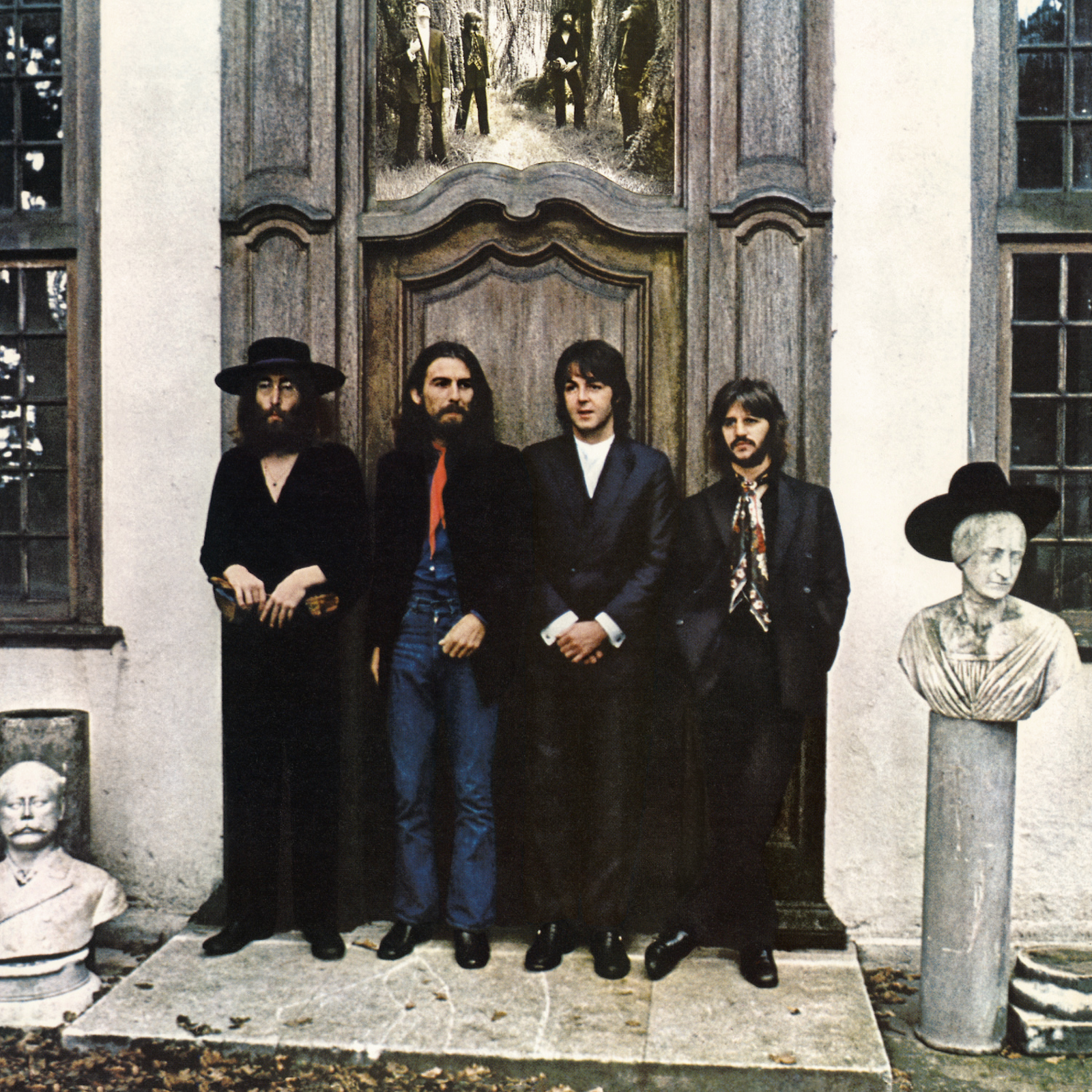
Whether found under original / label name, with no title on spine, or as subsequent issue with '(Look Up the Numbers)' written on spine, all pressings of Atlantean The Beatles Again sport the above front cover
 

Side one
1. You'll Be Mine ª
2. Suzy Parker *
3. Sour Milk Sea §
4. Goodbye {home demo} ^
5. Circles {demo} ∞
6. What's The New Mary Jane ªªª 
7. Step Inside Love / Los Paranoias ªªª
8. Mailman, Bring Me No More Blues ªªª
9. Sing One For The Lord {Atlantean choir mix} †
Side two
1. Come and Get It ªªª
2. Not Guilty ªªª
3. Hey Jude ¡
4. Revolution ‡
5. Isn't It a Pity {demo} ∆
6. The Ballad Of John & Yoko ¡
7. Old Brown Shoe π
8. You Know My Name (Look Up The Number) °

ª Anthology 1 {1995} 
* widely bootlegged but never officially issued on an audio release in the surface world; can be heard in soundtracks to the Let It Be film {Michael Lindsay-Hogg; 1970} and the documentary series The Beatles: Get Back {Peter Jackson; 2021}
§ Come and Get It: The Best of Apple Records {2010} or 2010 CD of debut Jackie Lomax LP Is This What You Want? {1969}
^ Super Deluxe Edition: Sessions {Abbey Road: 50th Anniversary; 2019} 
∞ Esher Demos {The Beatles: 50th Anniversary Edition; 2018}
ªªª Anthology 3 {1996}
† Encouraging Words {2010} (Dorna's mix, with Atlantean choir overdubbed, has never been heard by surface public; standard issue with later overdubs by the Edwin Hawkins Singers issued in 1970 on Billy Preston's second and final Apple LP 
¡ 1+ {2015} (Dorna's stereo remixes, aiming to match power of old mono mixes of previous singles, are not extant)
‡ Hey Jude {The U.S. Albums box set; 2014} or Past Masters {The Beatles (The Original Studio Recordings) stereo box set; 2009}
∆ Let It Roll: Songs by George Harrison {iTunes Store, and subsequent digital editions, bonus track; 2009}
π  Past Masters, Volume Two {The Beatles Box Set; 1988} or, if not available, Hey Jude {The U.S. Albums box set; 2014} or Past Masters {The Beatles (The Original Studio Recordings) stereo box set; 2009}
° Dorna's stereo remix of mono single b-side, never made available in surface world, incorporating at least some of the additional material later heard on the longer but overall less amusing edit (lacking the ending) which can be found in stereo on third Anthology volume; original mono mix that Dorna followed is on Mono Masters {The Beatles In Mono box set; 2009} & Past Masters {The Beatles (The Original Studio Recordings) stereo box set; 2009} while a mostly stereo assemblage grafting the missing parts of original mono release onto the Anthology remix has been bootlegged for years now.

next: 15} Let Back (1970)

previous: 13} The Beatles (1968)

Sunday, February 19, 2023

Beatlantis: 13} The Beatles (1968)

The Beatles (November, 1968, Timaeus | Apple)

< file under Beatles In Atlantis >

~ the stereo selections from this album, using the homogenized latest remasters, can be heard here on Apple Music ~

Though twice as long as in other markets, and despite being adorned in an ornate, colorful sleeve, the Atlantis edition of the Beatles' self-titled 1968 release was nonetheless a double album which became known, just like elsewhere, as "the white album." Surprising, perhaps even perplexing, upon first consideration; but true!

The sabotage of the vinyl processing plant (see Northern Songs entry), might logically be expected to have hastened a full, if temporary, transition to EMI Timaeus' world-first digital disc format (see Magical Mystery Tour entry). But a key material in the manufacture of these compact discs was soon commandeered for exclusive use in the national defense as the surface world threat against the undersea democracy worsened. While restoring the capacities of the vinyl plant, the revered "labcoats" — as the Timaeus engineers were known — found themselves researching and developing alternate materials, as the undersea resources used in the formulation of their high grade vinyl had fallen under attack as well. 

An abundant variety of white coral unique to the waters of Atlantis proved not just a suitable replacement as the main building block for a new sort of vinyl LP, but an improvement. Not really coral, as it was actually a plant that greatly resembled coral, it was known colloquially as snow-choral [sic] and in folklore was said to carry "silent songs of the ancestors." Sonically superior and capable of double the capacity due to a greatly tightened but deeper groove with immensely improved tracking, the resulting material could easily contain the entire double LP across just two sides, with no sonic degradation, Just how any material could produce these results still baffles surface world scientists, but contemporaneous reports indicate universal acknowledgment of this engineering marvel's stunning success.

Not content to just settle for the improvement and fit an entire double album on a single LP, and aware that all inessential surface world imports had been cut off due to the spiraling conflict — which meant no mono LPs coming in from UK for that growing sector of fans who'd purchase the Parlophone editions to augment their local stereo collections— Tivowr Dorna saw this as an opportunity to provide Atlantean fans both mixes in a single package. Hence, what could have been a single LP thanks to Atlantean advancements, and what would have required a quadruple LP anywhere else, indeed ended up as a double LP. 

The outer artwork, though, could not follow the format released in other markets. A square, white — blank, really — cover was the traditional housing for remembrance books at Atlantean funerals, with recordings from the services later made available in an identically austere sleeve. It is postulated that blankness and the uniformity of these covers represented the abandonment of ego and the unity of the Atlantean people as they passed on from this life, though surface world scholars are woefully lacking in real expertise regarding such traditions.

Dorna certainly didn't want the cover to carry this weighted connotation which the band did not intend, and so instead used a painting similar to one which would much later surface as the cover to a compilation of ballads. But, courtesy of being the first — and, it turned out, only — release on white snow-choral-derived discs without additional colorant, the album despite the painterly cover became known as the white album.

A colleague suggested to Dorna the possibility that some copies might be split up, with the stereo and mono discs sold separately and at a markup. To forestall this, Dorna, who wanted to encourage listeners to enjoy both mixes anyway, chose to distribute the mono and stereo mixes equally across sides. That is, the first half of the first side — which corresponds to the first side of the UK album — featured the mono mixes, while the second half of first side — which corresponds to the second side of the UK album — featured stereo mixes. Conversely the first half of the third side — which again corresponds to the first side of the UK album — featured the stereo mixes, with the second half of third side — which again corresponds to the second side of the UK album — featuring mono mixes. Mono/stereo distribution on the other three sides mirrored this approach.

The combination of the tightened groove and the untreated snow-choral proved a bit fragile, and, if polished with a common household cleaner, volatile. The fragility with grooves packed to 45 minutes led to future releases of other titles limiting side lengths to a maximum of a half hour or so — still achieving superior sonics compared to regular vinyl — and the addition of an oily black stabilizer. Pressings of The Beatles, however, continued to use the tighter groove, allowing for inclusion of both mixes, pressed on untreated snow-choral which lent the album its local nickname matching its global sobriquet. And the volatility, nay, explosiveness, led to several instances of the records being weaponized to defeat surface terrorists. Anyone who'd lost their copy using it in such defense of their nation's liberty was granted a replacement from Timaeus. Crates of records, unsleeved and ready to fire, were sent to any area anticipating an enemy incursion.

The album was, it nearly goes without saying, another critical and popular success for The Beatles unrivaled by any other surface artists or even any sea act. Conflicts with the outside world never impinged upon Atlantis' love for the work of their four land lads. 

As is clear from the above reproduction, unlike everywhere else, in Atlantis it wasn't the cover art that lent the album its blanched nickname

Side one
1. Back In the U.S.S.R. [mono] °
2. Dear Prudence [mono] °
3. Glass Onion [mono] °
4. Ob-La-Di, Ob-La-Da [mono] °
5. Wild Honey Pie [mono] °
6. The Continuing Story of Bungalow Bill [mono] °
7. While My Guitar Gently Weeps [mono] °
8. Happiness Is a Warm Gun [mono] °
9. Martha My Dear [stereo] ∞
10. I'm So Tired [stereo] ∞
11. Blackbird [stereo] ∞
12. Piggies [stereo] ∞
13. Rocky Raccoon [stereo] ∞
14. Don't Pass Me By [stereo] ∞
15. Why Don't We Do It In the Road? [stereo] ∞
16. I Will [stereo] ∞
17. Julia [stereo] ∞
Side two
1. Birthday [mono] °
2. Yer Blues [mono] °
3. Mother Nature's Son [mono] °
4. Everybody's Got Something to Hide Except Me and My Monkey [mono] °
5. Sexy Sadie [mono] °
6. Helter Skelter [mono] °
7. Long, Long, Long [mono] °
8. Revolution 1 [stereo] ∞
9. Honey Pie [stereo] ∞
10. Savoy Truffle [stereo] ∞
11. Cry Baby Cry [stereo] ∞
12. Revolution 9 [stereo] ∞
13. Good Night [stereo] ∞
Side three
1. Back In the U.S.S.R. [stereo] ∞
2. Dear Prudence [stereo] ∞
3. Glass Onion [stereo] ∞
4. Ob-La-Di, Ob-La-Da [stereo] ∞
5. Wild Honey Pie [stereo] ∞
6. The Continuing Story of Bungalow Bill [stereo] ∞
7. While My Guitar Gently Weeps [stereo] ∞
8. Happiness Is a Warm Gun [stereo] ∞
9. Martha My Dear [mono] °
10. I'm So Tired [mono] °
11. Blackbird [mono] °
12. Piggies [mono] °
13. Rocky Raccoon [mono] °
14. Don't Pass Me By [mono] °
15. Why Don't We Do It In the Road? [mono] °
16. I Will [mono] °
17. Julia [mono] °
Side four
1. Birthday [stereo] ∞
2. Yer Blues [stereo] ∞
3. Mother Nature's Son [stereo] ∞
4. Everybody's Got Something to Hide Except Me and My Monkey [stereo] ∞
5. Sexy Sadie [stereo] ∞
6. Helter Skelter [stereo] ∞
7. Long, Long, Long [stereo] ∞
8. Revolution 1 [mono] °
9. Honey Pie [mono] °
10. Savoy Truffle [mono] °
11. Cry Baby Cry [mono] °
12. Revolution 9 [mono] °
13. Good Night [mono] °

° The Beatles {The Beatles In Mono box set; 2009}
∞ The Beatles {The Beatles Box Set; 1988} 

next: 14} The Beatles Again (1969)

previous: 12} Northern Songs (1968)

Sunday, January 15, 2023

Beatlantis: 12} Northern Songs (1968)

Northern Songs (July, 1968, Timaeus | Apple)

< file under Beatles In Atlantis >

~ an approximation of this album, using latest remasters, can be heard here on Apple Music ~

Following the cultural revelations of the Winter of Mystery, the project of Atlantean democracy flourished. Strides in justice for all citizens regardless of strata were the renewed focus for the young leadership and citizenry. Great progress was made in assuring the needs of the people were met, their liberty secure throughout, and Atlantis strengthened its position as the cleanest, most environmentally sound of advanced nations— by far the most advanced, at that. This surging social democracy was perceived as a threat by some, and the pirate front, or Pirate Front Facade as they came to be derisively known — that is, the mercenary terrorists who'd feigned piracy as a front to disguise their true aims and the identity of their puppet masters — renewed attacks on The Great Realm.

It is not the place of this blog to speculate on just who was dictating the actions of the Pirate Front, though it would not be idle speculation nor really speculative at all. Let us say more directly it is not the purview of this blog to divulge the unholy alliance of nation-state actors, from both eastern and western powers, directing these attacks, as the evidence is not at our discretion to reveal to the surface world.

Among the resources targeted by the PFF was the processing plant responsible for formulating the world's finest blend of polyvinyl chloride and other materials used in pressing EMI Atlantis' LP records as well as most other locally produced vinyl LPs; hence, the next Beatles album was to be the only one initially offered only in Atlantis' still-new compact disc format.

Tivowr Dorna had found the ideal home for the exquisite Strawberry Fields Forever / Penny Lane double a-side single when crafting the legendary LP-length iteration of Magical Mystery Tour. However, he still had the earlier Paperback Writer / Rain single to bestow upon Atlantean listeners— as well as both sides of the latest worldwide single, Lady Madonna backed with The Inner Light. Owing to George Martin's established practice of always sending Dorna outtakes, Timaeus already had on file the quaternity of numbers UK fans would not hear until those appeared in the Yellow Submarine feature film set to debut in London in July and which fans worldwide could not acquire until placed as the four "new" songs in middle of first side of the Yellow Submarine soundtrack LP the following January. In recognition of Atlantis' unique position as the sole submerged market, Atlantean theaters were licensed to begin screening the aquatic animation the day following its UK premiere, starting with their own gala unveiling attended by the shining lights of Atlantean pop culture, not the least of whom was Tivowr himself. Dorna enjoyed the event, which took place under heightened security due to the current circumstances, satisfied with having met his own goal in regards to the opening. He'd been eager to get some new Beatles into the hands and ears of Atlanteans during this troubled yet hopeful time, coinciding with the movie's slated summer run. Aware the band had not readied any new material for the film's soundtrack, and gleaning that no UK audio release featuring the four "new" songs was imminent, he'd chosen to include those leftover 1967 psychedelic Beatles tracks, and their accompanying early 1968 earthy rocker Hey Bulldog, on the new LP (or, CD, it turned out) he was compiling, forestalling any issue of the Yellow Submarine soundtrack LP available elsewhere at the start of the next year. Hence, despite being the world's only undersea nation, Atlantis never saw release of a Beatles album named after a submarine!

Timaeus did, nevertheless, persuaded by Dorna, later the same year issue an Atlantean compendium of George Martin's re-recordings of his score for the film that would come to comprise side two of the approaching Yellow Submarine LP in all other markets. These selections, combined with earlier Martin recordings interpreting Beatles compositions, and a Martin outtake from the band's upcoming double LP The Beatles, were released, only on compact disc, under the title … in Pepperland. The exact length of the Yellow Submarine selections is not known, as Timaeus rush-released the collection to arrive on Halloween — a surface-originated holiday Atlanteans did observe and delight in — and so Dorna had to create his own edits of the freshly recorded material, which Martin would not prune down for the international January, 1969 LP side until late November. Pepperland was well-received by Atlantis' large audience for soundtracks, ironically a target market for Timaeus long before the label dipped its toes into the waters of surface world rock. This would prove to be the final compact disc manufactured in Atlantis, as the material used for the CDs' thin metallic inner layer was soon reserved for exclusive use in the national defense. 

The tracklist for George Martin in Pepperland was as follows:

01 Don't Bother Me » Off the Beatle Track
02 There's A Place » Off the Beatle Track
03 I Should Have Known Better » A Hard Day’s Night (soundtrack)
04 And I Love Her » A Hard Day’s Night (soundtrack)
05 Ringo’s Theme (This Boy) » A Hard Day’s Night (soundtrack)
06 A Hard Day’s Night » A Hard Day’s Night (soundtrack)
07 Help! » Help! {The George Martin Orchestra LP}
08 I Need You » Help! {The George Martin Orchestra LP}
09 Auntie Gin's Theme (I've Just Seen a Face) » Help! {The George Martin Orchestra LP}
10 Tell Me What You See » Help! {The George Martin Orchestra LP}
11 She Said She Said » … Instrumentally Salutes "The Beatle Girls"
12 Woman » … Instrumentally Salutes "The Beatle Girls"
13 And Your Bird Can Sing » … Instrumentally Salutes "The Beatle Girls"
14 A Beginning » Anthology 3
15 Pepperland » Yellow Submarine
16 Sea Of Time » Yellow Submarine
17 Sea Of Holes » Yellow Submarine
18 Sea Of Monsters » Yellow Submarine
19 March Of The Meanies » Yellow Submarine
20 Pepperland Laid Waist » Yellow Submarine
21 Yellow Submarine In Pepperland » Yellow Submarine

Dorna also had at his disposal instrumental recordings, by Harrison supported by John Barham, fellow Liverpudlians the Remo Four, fellow Beatle Starr, Eric Clapton, Aashish Khan, Mahapurush Misra, and a host of others, for another upcoming film, Wonderwall. Dorna intended to issue it in its entirety as the first solo Beatle LP, but Timaeus brass feared such a move would fuel rumours of a looming Beatles breakup and unsettle a nation already on edge from recent attacks. Dorna acquiesced. Keenly aware Atlantean fans loved Flying off of the previous album, he took the opportunity to expand this latest collection he was assembling to standard Beatles LP-length by incorporating four of the more Western-leaning selections that would later appear worldwide on Wonderwall Music.

Having only been provided a mono mix of Only a Northern Song, and without a transfer of the multitracks at the ready, Dorna used Timaeus' experimental demixing tech which he helped pioneer to craft a stereo version. He also applied it to subtler effect on Paperback Writer, aiming to more closely follow the balance of the powerful mono mix. Finally, Tivowr added a perfect, short edit of just the ditty from the Beatles' 1967 fan club Christmas record, without the band's spoken holiday greetings as this would detract from the flow of the album, hampering repeated listens. This edit was later planned for inclusion as final track (or, possibly, within a final medley) of the canceled 1984 EMI compilation Sessions, and has to this day never seen official release outside of Atlantis. The final tally of tracks, not even accounting for the selections intended for Wonderwall Music (which were properly identified as Harrison solo numbers, despite Timaeus' misgivings), resulted in the Beatles collection with the highest percentage of writing contributions from Harrison.

Northern Songs stands as the closest Atlantis got to one of Capitol's "soundtrack" versions of a Beatles album, interspersing instrumental selections among Beatles recordings. It shared another, unfortunate, characteristic with a certain Capitol release, only including two Lennon originals as on the US label's dreadfully diminished edition of Revolver. In a fascinating, though indefinitive, glimpse into Dorna's thinking and aesthetic sense, an early draft of the track listing reveals the February 1968 mix of Across The Universe slotted in where the brief Christmas number would instead appear; an apparently later draft has the collection retitled after Across the Universe, with the song placed second-to-last. This is all intriguing on several counts: the inclusion of the song would have remedied the relative paucity of Lennon-penned Beatles tracks, yielding a total of three each from him, McCartney, and Harrison, alongside the group-credited holiday number; Atlanteans don't celebrate the holiday in question (though they were quite familiar with it and other religious and secular traditions of the land-dwelling peoples, and shared a fondness for all solstice-timed celebrations); regardless of LP or CD format, there was plenty of room to include Across the Universe with no need to remove anything; and, finally, the consideration of Across the Universe as title track strongly suggests Dorna thought highly of the number. Yet, despite all this, it was excluded. One can only surmise Dorna ultimately did not feel the ethereal ballad fit the tone, mood, or purpose of the assemblage he was preparing, and so set it aside for future use.

Upon release, the minimal amount of Lennon compositions was indeed gently bemoaned by fans and critics who, universally praising his two showcases, simply wished for more. Nonetheless, while not the artistic triumph of the Magical Mystery Tour concept album, and though lacking an absolute touchstone like A Day in the Life, Northern Songs resonated deeply with Atlantean listeners. Potentially a risky move, Dorna's mid-'68 creation proved the right call, demonstrating yet again his unassailable timing and approach to presenting the fabs to Atlantis. "All Together Now" even became a joyful rallying cry as the nation faced mounting threats from outside.


Featuring the four Beatles songs unique to the Yellow Submarine animated film and eventual worldwide soundtrack LP, Northern Songs' release was partly timed to promote the cartoon, arriving on shelves simultaneous to the film's underwater debut in July 1968. The release was not sequenced for side breaks, as Dorna learned while compiling it that it was to be issued solely on CD; while likely a suspected subsequent LP issue retained this identical sequence, where the sides may have broken is unknown
  1. Paperback Writer °
  2. Rain π
  3. On the Bed ∞
  4. Only a Northern Song †
  5. All Together Now ‡
  6. Red Lady Too ∞
  7. It's All Too Much ‡
  8. Party Seacombe ∞
  9. Christmas Time (Is Here Again) *
  10. Hey Bulldog ‡
  11. Ski-ing ∞
  12. Lady Madonna π
  13. The Inner Light ∆
All tracks stereo.
° 1+ {2015} 
π  Past Masters, Volume Two {The Beatles Box Set; 1988} or, if not available, Past Masters {The Beatles (The Original Studio Recordings) stereo box set; 2009} or Hey Jude {The U.S. Albums box set; 2014} 
∞ Wonderwall Music {1992} 
† Yellow Submarine Songtrack {1999}
‡ Yellow Submarine {The Beatles Box Set; 1988} 
* never officially released in the surface world; can be found on certain bootlegged releases of canceled 1984 Sessions compilation; a similar edit, though missing the opening sounds, could be assembled from the version included as b-side of the "Threetles" 1995 single Free as a Bird
∆ The Beatles {Compact Disc EP. Collection; 1992}

next: 13} The Beatles (1968)

previous: 11} Magical Mystery Tour (1967)

Thursday, December 29, 2022

Beatlantis: 11} Magical Mystery Tour (1967)

Magical Mystery Tour (December, 1967, Timaeus)

< file under Beatles In Atlantis >

~ an approximation of this album, using latest remasters, can be heard here on Apple Music ~

Upon inspection of the sleeves to certain 1960s Capitol compilations issued as Beatles albums in the USA, one can find credit given for compiling the recordings— some could certainly say, too much credit (some would go as far as to say blame, rather than credit). Yet it's never been known just who deserves praise for the label's greatest entry in the Beatles library, Capitol's one lasting contribution to the band's core catalog, the full-LP iteration of Magical Mystery Tour.  The songs associated with the film were to appear back in the UK in the novel form of a double-EP; seemingly someone at Capitol, knowing this wouldn't fly stateside, had the brilliant idea to gather all those numbers together on the first side of an LP — a side perfectly sequenced, presumably by this same Mystery curator — while adding a second side comprised of non-LP Beatles single releases from earlier that same year. Unlike previous Capitol collections which altered existing albums, this issue simply expanded upon the UK release, resulting in a masterpiece of psychedelic rock. Yet it's never been known who to thank for this triumph… until now. Recent excavation of the oceanic record, corroborated by newly unearthed memos from the EMI vault, prove that no Capitol exec or staffer deserves Beatles fans' gratitude for this preeminent platter. It was none other than Tivowr Dorna down at the bottom of the sea who crafted this gem that rose to the top of the charts.

Knowing an EP would be dead in the water, or close to it, in Atlantis as that format had no history in the nation, and having sat on the Strawberry Fields / Penny Lane single, Dorna upon receipt of the soundtrack songs and contemporaneous singles had a vision of Magical Mystery Tour delivering on the promise of Pepper's— the promise of a concept.  Though like on Sgt. Pepper's the songwriting selection was imbalanced in favor of Paul over John, here John's three and half number's were so incredible —  with one ending each side wondrously — that Dorna felt a true Beatles balance would be met. 

Aware the film was to be a loose travelogue accompanied by visual enactments for the songs, Dorna heard this voyaging theme immediately throughout the soundtrack songs. He also recognized the line carried through the other 1967 releases at his disposal. In a hurried memo to Martin, Dorna wrote, in part, explaining—

Georg [sic],

I believe across these EP tracks and the year's preceding single sides resides the sort of "concept" album fans in this country were yearning for from Pepper's— and most of the music is even more exciting. The slim narrative framework of the upcoming film — taking a trip with the Beatles and friends on a bus — is reflected in the soundtrack songs, but can also be gleaned from the remaining tracks. Each song's about coming or going / traveling, or a destination -within or without: place/time/status. I propose the following sequence for a full length LP for Atlantean market; quick notes on my thematic thoughts.-.

Side one)
Opener — statement of theme; invitation to join the tour
Second track — alone on a hill, with the world spinning 'round
Third track — aerial instrumental
Fourth track — friends lost on way to a place (while host may wander off to sleep)
Fifth track — a long long time ago
Final track — more flying; waiting for a van; then, of course, an English garden; climbing the famous tower. Kinda disorienting going all over like this. The perfect side closer​ 
 
Side two)
Opener — High? Low? Stop? Go go go go
Second track — in a tree, again high or low; again being asked to come along, this time to a childhood place; reflective of theme that at some stage you tell me was to and/or still did inform previous album but most overt right here and with next number…
Third track — to and from colorful places up and down the lane, under the blue sky, and back
Fourth track — How often have you been / What did you see when you were … there? Not to mention, inside a zoo!
Finale — debuted on first global / multinational broadcast (which even had a space segment) — we saw it here, and it was as you know warmly received; commences with a national anthem; and determines (one could say, after all this traveling…) there's nowhere you can be that isn't where you're meant to be. An ideal(istic) conclusion to our voyage​

Sea [sic] where I'm at? More thematic unity than Pepper's which pretty much just has the framing device of opener / reprise / cover art costumes to let us know they're a different band. And musically as cohesive as that earlier album, sonically as or more expansive and adventurous. It occurs to me my counterparts over at Capitol might care for this idea; it reminds me of a landmark LP they released years back — far as the theme goes, this one's effectively a psychedelic rock 'n' roll Come Fly With Me.

Sound good? You know I've stopped altering the tracklists to the albums you and the band have so painstakingly crafted— this rather is merely an expansion to a format that is viable in this market, and into a full-length listening experience that will match fans' hopes here and exceed any expectations even among our increasingly critical music press…

Apparently, Martin thought this idea did indeed "sound good." Not only did he convey approval for such an Atlantean release, he took to heart Dorna's suggestion to refer this to Capitol. For the first time, in a Library Industries exclusive, we are revealing that when Capitol Records representative Voyle Gilmore was handed the tapes for these songs — to bring from England back to the United States — Martin also provided a copy or summary of Dorna's notes on creating a long playing record album. The rest, and up until now, only the rest, is history — with Magical Mystery Tour becoming the one Capitol album, albeit it turns out really originating as a Timaeus album, to ascend to a position in the band's "core catalog."

 Still, Dorna had to assemble the recordings working within usual parameters of preparations for the Atlantis market: a widespread preference for stereo, and awareness of the burgeoning import of mostly mono UK LPs. Two special factors came into play: stereo mixes were not provided for all selections, and, because these numbers were spread across single sides and the upcoming LP, with no UK full-length on the horizon, there would be no mono album to import. This second condition provided a temporary solution to the first. Dorna could not delay release of the album while requesting and then awaiting digital transfers of the multi-tracks, as Martin had done at his request for previous album's remix, from the UK; the album needed to be in fans' hands in time for the accompanying film, set to debut during Atlantis' winter solstice celebrations. So while Dorna still planned to complete the set of stereo mixes, knowing there'd be no mono UK import to compete with, he convinced Timaeus to initially issue Magical Mystery Tour as, at this late date, the first, and, it would turn out, only, mono Atlantis Beatles album. Fans were assured a stereo release would soon follow, with a surprise— and at a discount for those who purchased the mono issue.

The original, all-mono issue of the Beatles' 11th Atlantis album; the album sides are "bandless" — that is, the songs run together as on Pepper's, for a continual listening experience

Early in the new year, with delay attributed to the holidays, Dorna received analog-to-digital transfers of the multitracks for the last three songs, which had at first only been provided in mono, again accomplished via the cutting edge Atlantean Pod Click Train with which he'd entrusted Martin. (Dorna realized that the second half of the stereo I Am The Walrus was indeed "fake stereo" but was also aware the components for crafting a true stereo counterpart of that segment were not available.) He also received transfers of Strawberry Fields Forever, though he'd already received a stereo mix in the first batch of tapes, with Martin noting a "tidier" mix might be in order, providing some pointers to that effect. Dorna set upon creating stereo mixes of the final three, along with a remix of Strawberry Fields which he eventually set aside, deferring to the original 1966 stereo mix Martin had first sent.

The treasured 1973 West German HÖR ZU issue of Magical Mystery Tour Plus Other Songs has long been revered as the first complete release of the album in true stereo, with a couple of the songs reported to have been mixed as last as 1971. However, we can now see Dorna's work yielded the first "true stereo" release - sometime in first or second month of 1968. Additionally, from further extant correspondence recently discovered, it seems the Magical Mystery Tour Plus Other Songs stereo mixes of the three final tracks and the remix of Strawberry Fields either closely adhere to Dorna's mixes, or, possibly. are Dorna's mixes— exact copies of which could have been sent to Martin in his returning Pod Click Train.

The surprise promised by Timaeus to arrive with the stereo edition of the album was the unveiling and availability of consumer-level implementation of Atlantis' digital tsunami in sound development — the first compact disc player. Nearly a decade and half before select, audiophile, monied surface people acquired the tech, Atlanteans were provided CD players at cost from a joint government / Timaeus venture, and the first disc in countless listeners' libraries was the stereo Magical Mystery Tour CD — the world's first commercially released digital audio content — sold at a great discount, as guaranteed, to owners of the mono LP. 

Atlantean fans and critics not only embraced Dorna's presentation of the record as a concept album, they reveled in the film! The travel theme resonated deeply with listeners and viewers, who, due to intermittent struggles with the surface world as well as outright travel bans imposed by certain (most) surface countries over the years, had little experience above their own waters' borders. Magical Mystery Tour gave them the opportunity to go beyond on a day trip with the fabs.

Though in other territories the motion picture was met with opprobrium, in the sea nation the feature was more than a hit— it became an instant holiday tradition. Debuting in full color, unlike England's dismal first showing in black & white, and released during Atlantis' winter solstice holiday on the exact day coinciding with the annual intake of what the surviving records describe as "the envisioning algae" at the peak of the seasonal celebration, the kaleidoscopic onscreen romp was experienced as intended — and beloved beyond anyone's imagination. With its psychedelic stylings and internal-external seeking so aligned with Atlantean Solstice practices and aesthetics, Magical Mystery Tour had a greater cultural impact than any other musical release of the era. Not long after parts of the western surface world had the so-called Summer of Love, with which Pepper's is often associated, Atlantis instead lived the Winter of Mystery, not just associated with but largely spurred on by the nation's widespread love of the Magical Mystery Tour project, most of all the tremendous set of songs their own Tivowr Dorna had the great sense to assemble into this perfectly conceived exquisite rock album.
 
The stereo edition, released within a couple months of the mono LP; originally intended to quickly follow on LP (hence the "also available on LP" footer) it was soon decided, due to the runaway success of both the mono LP and the stereo CD promotion, to keep the stereo release CD-only. Note the Apple logo, also a first for an audio release

Side one
1.     Magical Mystery Tour • / †
2.     The Fool on the Hill • / †
3.     Flying • / †
4.     Blue Jay Way • / †
5.     Your Mother Should Know • / †
6.     I Am the Walrus • / †
Side two
1.     Hello, Goodbye • / §
2.     Strawberry Fields Forever • / ∞
3.     Penny Lane • / *
4.     Baby, You're a Rich Man • /∆
5.     All You Need Is Love • / °

Mono edition:
• Magical Mystery Tour {The Beatles in Mono box set; 2009}

Stereo edition:
† Magical Mystery Tour (Compact Disc One: Stereo) {Compact Disc EP. Collection; 1992} 
§ Magical Mystery Tour {The Beatles Box Set; 1988}
∞ [original 1966 stereo mix]; never issued digitally; § though is said to closely mirror (or, even be) Tivowr Dorna's remix
* Magical Mystery Tour {The Beatles Box Set; 1988}; said to closely mirror (or, even be) Tivowr Dorna's mix
∆ The Beatles {Compact Disc EP. Collection; 1992}; said to closely mirror (or, even be) Tivowr Dorna's mix
° Yellow Submarine {The Beatles Box Set; 1988}; said to closely mirror (or, even be) Tivowr Dorna's mix

next: 12} Northern Songs (1968)

Saturday, December 24, 2022

Beatlantis: 10} Sgt. Pepper's Lonely Hearts Club Band (1967)

Sgt. Pepper's Lonely Hearts Club Band (June, 1967, Timaeus)

< file under Beatles In Atlantis >

~ an approximation of this album, using latest remix, can be heard here on Apple Music ~

With Revolver[s] making such big waves across Atlantean arts, the follow-up album was awaited with great anticipation. It was not, however, received with matching enthusiasm.

Tivowr Dorna was worried about such a reaction, since his own response upon hearing the material was mixed.

Based on title, cover art, early commentary he'd seen from aboveseas press, and the promise of the opening song, Dorna expected a concept to play out across both sides. His expectations were not met. Instead, there was very little connecting the songs beyond the lack of gaps between them. Also, between the stirring opening title track introductory medley with the rousing With a Little Help from My Friends and the astonishing final number, A Day in the Life, much of the material was not, in his mind, quite up to the exceedingly high standards set across 14 songs on previous LP. What followed proved, as ever, that he was the perfect choice to package and pitch the Beatles to his nation: public and critical response widely mirrored his initial reaction. He really did have his webbed fingers on the pulse of Atlantean music tastes. He was so trepidatious about the album's reception he took the unprecedented step of greatly limiting the initial pressing run. 

Though less impressed on a song-by-song basis, as with Revolver[s] Dorna saw Pepper's tracklist as sacrosanct. Leaving song selection alone meant that in the album-only market of Atlantis, most fans would not hear the landmark tracks Strawberry Fields and Penny Lane until well after Sgt. Pepper's arrived, though elsewhere they preceded the album's release by months.

Pepper's was the first and only eligible Beatles LP not to top the Surface Spring!Summer Seven poll of best midyear foreign albums in the influential Atlantis Tide Monthly, the de facto guidebook to popular culture, placing second behind The Velvet Underground & Nico which was widely embraced by Atlanteans who praised its portrayal of surface life which contrasted the rosy vibe of much of the material brought in from the so-called Summer of Love. Still, the number two slot is high placement and the album was widely enjoyed even if it didn't blow the seabreathers' minds the way it rocked the rest of the fabs' audience. 

One less than complementary reviewer took the thin framework of a concept and hung his negative one-line review right on it: "Sgt. Pepper's Old-Time Combo Quartet are all well and good," wrote national treasure and acerbic scribe Zimnfr Syrnq, "but I sorta miss that rock 'n' band they kinda look like."

In the Tide Monthly's own Underwater and Underwhelmed: The Beatles Finally Float To the Surface, a consortium of critics convened to consider this latest long-player similarly exhorted "Bring Back The Beatles" and bemoaned the diminished songwriting input of George Harrison, whose increased contributions and prominence on Revolver[s] — getting the opening track, no less — hinted at increasing parity with John and Paul and had helped elevate that previous album to new heights. Nonetheless, the joint review ended by acknowledging that the album opens with a lot of heart and closes with an undeniable masterpiece, while in between, a splendid time really is guaranteed for. "Sure, it isn't much of a concept, but we don't need one anyway. It's just not Revolver[s], is all; but then, what is?"

Noticing how imports of the mono UK LP were far outpacing previous Beatle imports, apparently spurred on by word of mouth reaching beyond the usual niche import fan circle, and realizing some of the more complementary reviews referenced a preference for the mono mix, Dorna reconsidered his initial reaction and reached for the mono reference tape he'd been sent. He immediately recognized it as more powerful: here, Sgt. Pepper's Lonely Hearts Club Band still sounded and felt like "that rock 'n' band they kinda look like." But he doubted it would be wise to try to sell his stereo-centric nation on a mono release. A solution sprang to mind. Dorna had recently, per their preserved correspondence, sent George Martin a fully functional prototype of Timaeus' world-first digital audio workstation - an example of Atlantis' highly advanced technology - the 64 track capable Pod Click Train. Dorna contacted Martin and asked that he, in secrecy, transfer the Pepper's multitracks to the Pod Click Train for secure shipping back to Atlantis. Intrigued, and appreciative of Dorna entrusting him with such an electronic wonder, Martin happily obliged. Upon receipt of the digitally duped multis, Dorna set about remixing a stereo version that retained the power and attention to detail evinced by the mono mix, while replicating a couple smoother transitions from the original stereo mix. Turns out his initial limited run strategy paved an avenue for an almost immediate reassessment of the album: as soon as the short run first pressing was gone — a large percentage of which had been allocated to prerelease promo copies for reviewers and others in the media — Atlantean shelves were stocked with this remixed version. Album sales soared, and though still seen as a slight creative dip in comparison to the album's predecessor, the record was a hit. It is speculated that decades later, when Martin's son Giles remixed Pepper's into stereo with an eye and an ear on the revered original mono mix, he was aware, from his father, of this successful Atlantean precedent. 

For an especially limited run, while remixing to stereo Dorna also prepared from the album's multitracks the world's first 5.1 mix, to be played back on a new three-needle surround turntable playback system. The multi-needle carrier proved too finicky for consumer use, and with development of their digital audio tech increasing rapidly, Timaeus abandoned this triple-stylus system. From the single extant review, it seems the 5.1 mix was very similar to Dorna's stereo remix, though spread across five channels.

Owing to Atlantis' short-lived ban on surface photography, the famed front cover was replaced by a painting of the same

Side one
1.     Sgt. Pepper's Lonely Hearts Club Band †
2.     With a Little Help from My Friends †
3.     Lucy in the Sky with Diamonds †
4.     Getting Better †
5.     Fixing a Hole †
6.     She's Leaving Home †
7.     Being for the Benefit of Mr. Kite †
Side two
1.     Within You Without You †
2.     When I'm Sixty-Four †
3.     Lovely Rita †
4.     Good Morning Good Morning †
5.     Sgt. Pepper's Lonely Hearts Club Band (Reprise) †
6.     A Day in the Life †

All tracks stereo (or surround), Tivowr Dorna's {lost} remixes. 
† Sgt. Pepper's Lonely Hearts Club Band stereo (or 5.1) remix {Sgt. Pepper's Lonely Hearts Club Band: 50th Anniversary Edition; 2017} 

next: 11} Magical Mystery Tour (1967)

previous: 09} Revolvers (1966)